
Nussir is a mountain, not a mine! - Call to action against the "Nussir mine" beyond liberal environmentalism in Norwegian-Occupied Sápmi
von: anonym am: 14.01.2026 - 11:15

 Creative Commons by-sa: Weitergabe unter gleichen Bedingungen
Event Datum:
Sonntag, März 1, 2026 - 00:00
Stadt/Region:
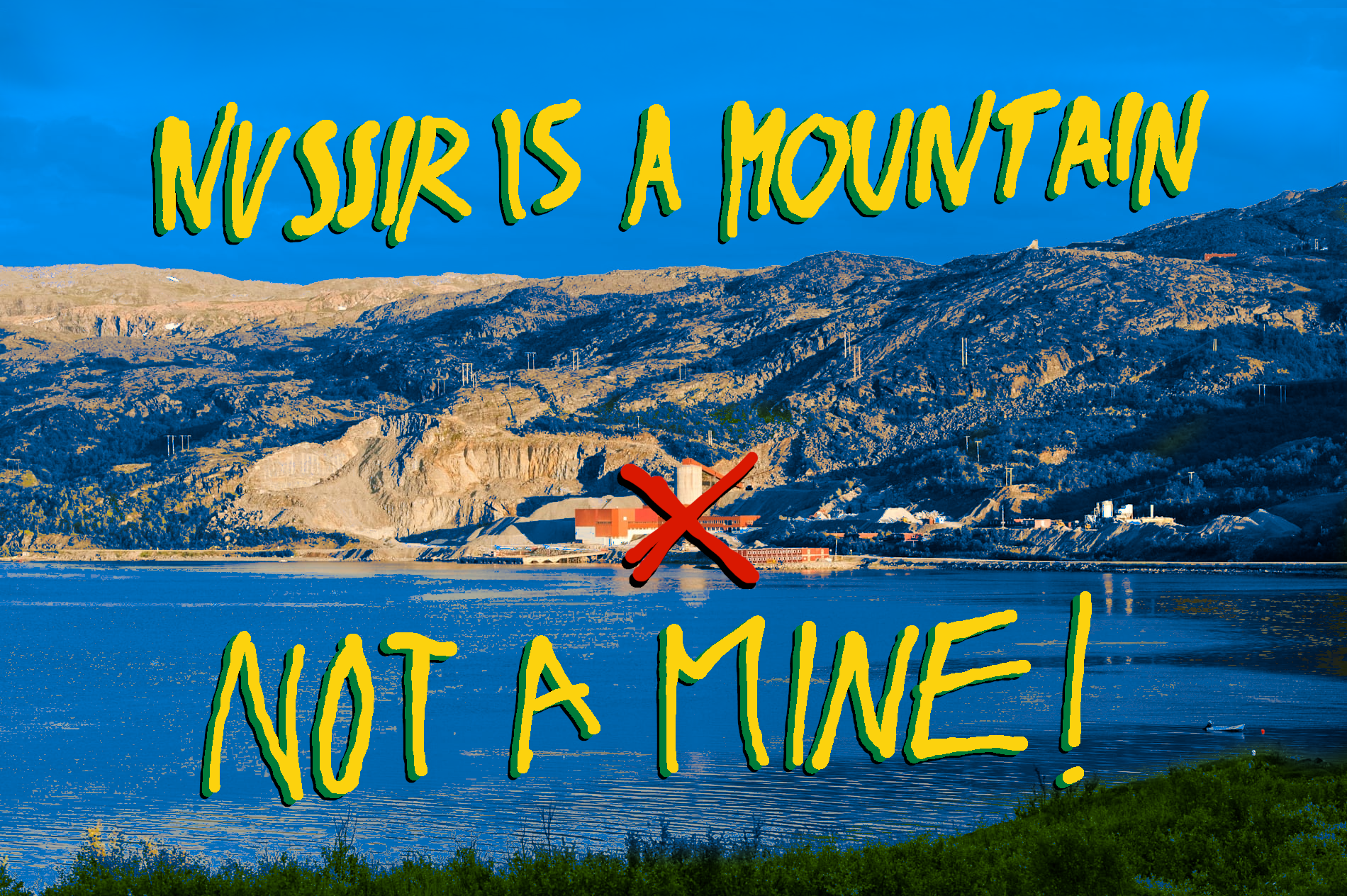
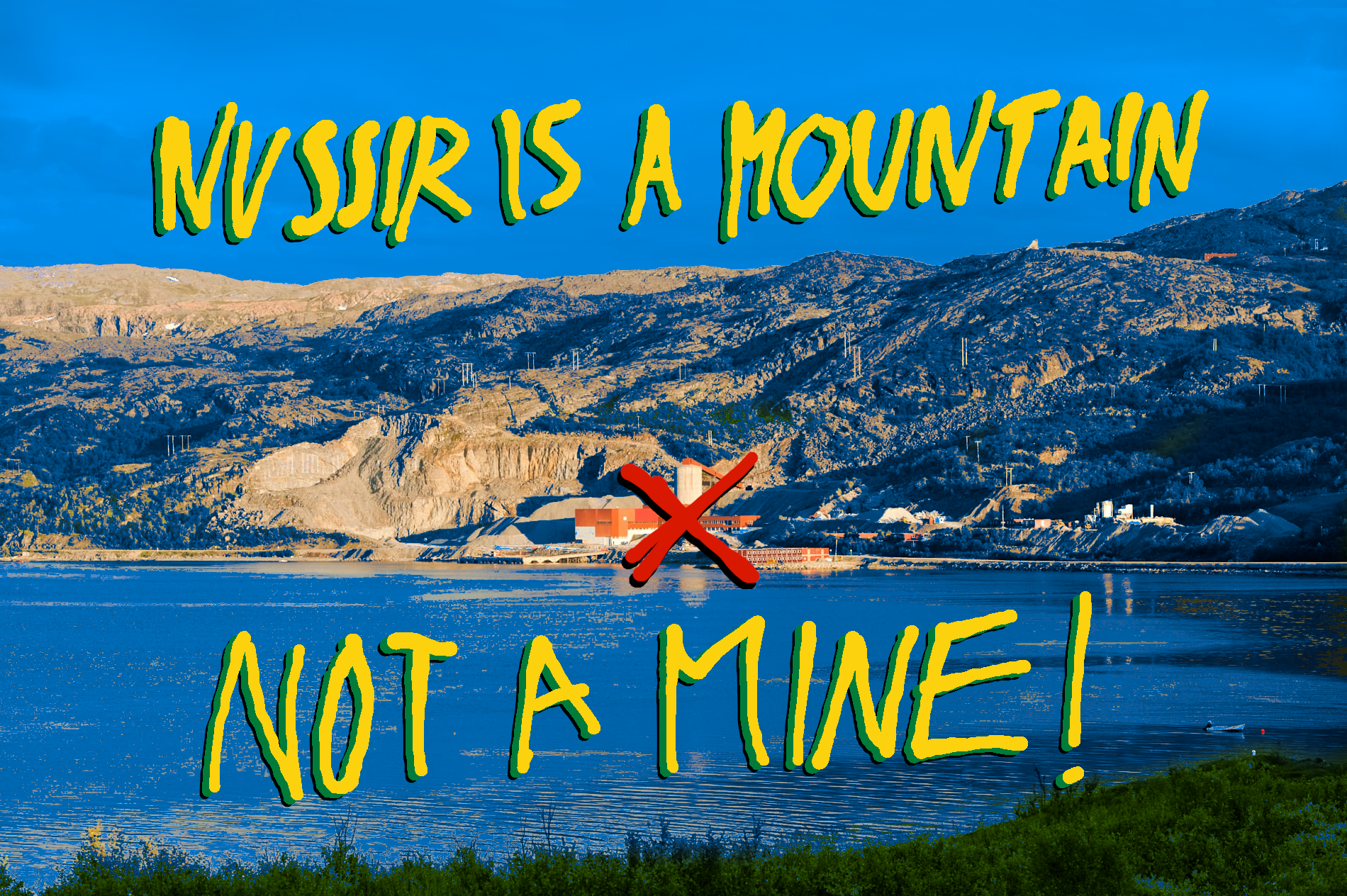
This is a global call to action against the copper-mine currently under construction in Riehpovuotna (called "Repparfjord" by the colonizers), in Norwegian-occupied Sápmi.
1. WHAT IS THIS?
- This is a global call to action against the copper-mine currently under construction in Riehpovuotna (called "Repparfjord" by the colonizers), in Norwegian-occupied Sápmi.The Canadian company Blue Moon Metals (BMM) – full owner of the mine's operator Nussir ASA – is actively involved in the colonization of Sámi ancestral lands through the construction of two copper and precious metals mines in the region. This is part of a rapid expansion of corporate extractivism stemming from the EU's Critical Minerals Act, as the "Nussir mine" has been named a "Strategic Project," allowing for large land grabs and cutting through any environmental or Indigenous land protection under the banner of a so-called "Green Transition". More information on the history of the land and the numerous Sámi-led struggles, can be found in the later sections.
2. WHAT CAN BE DONE?
- Besides the Nussir copper-gold-silver project, BMM is currently advancing two other brownfield polymetallic projects, Nye Sulitjelma Gruver (NSG) copper-zinc-gold-silver project in Norway and the BMM zinc-gold-silver-copper project in California. All 3 projects are located within existing local infrastructure including roads, power grids, railways, and/or previous extractivist projects. This makes them desireable for investors, but also more easily accessible for those who wish to intervene.
- In December 2025, the first phase of the Nussir-mine project was completed, by detonating an entrance tunnel through the mountain. The next phase entails preparation of surface areas, which means more activity above ground and around the mine. This is a crucial moment, as BMM now depends on much more investments to further pursue their operation. So let's make this a nightmarish quest! We believe that there is a possibility to win this fight if we broaden our ways of attack and internationalize the struggle. We do not want to define your means or your targets. Do whatever feels in line with your way of acting and existing skills. It could be organizing a blockade, a banner drop, or a solidarity photo, while emphasizing the need for the most materially impactful actions at this time. We welcome your creativity and experience, and hope to see many different approaches on all kinds of platforms.
Main investors: These are the main targets on which we suggest to put pressure.
- Hartree Partners LP has invested $140 million USD in BMM, in conjunction with subsidiaryOaktree Capital Management, in the Nussir mining project, and is one of the largest investors in BMM. They have offices all over the world in, New York City, Istanbul, London, Geneva, Hamburg, Oslo, Cape Town, Dubai, Shanghai, Melbourne, Mexico City, Santiago, Lima, Houston, St. Louis, Washington DC, Tokyo and Toronto.
- Oaktree Capital Management has offices in Stockholm, London, Frankfurt, Amsterdam, Luxembourg, Zurich, Paris, Madrid, New York, Los Angeles, Dallas, Houston, Sydney, Singapore, Dubai, Bejing, Mumbai, Hyderabad, Hong Kong, Seoul, Shanghai.
- Monial Norwegian LLC, owned by the Holta family, owns 10% of the shares in Blue Moon Metals and 32% (6,74 mill NOK) of Nussir ASA. Office is outside of Oslo.
Other key collaborators/companies involved: Engage with these based on where you are located and what's possible for you.
- Wheaton Precious Metals operates and invests in mining projects and contributes 3% of BMM's funding as a strategic shareholder.Wheaton has offices in Vancouver, Cayman Islands and Luxembourg.
- Altius Minerals Corporation is a 2% shareholder and Canadian company that owns royalties for 12 mines producing Potash and "High Purity" Iron Ore, Gold and Base & Battery Metals as well as 13 renewable energy projects worldwide. Exploration for more possible mining activities in Swedish-occupied Sámpi is currently happening through the Canadian-based mineral exploration company Gungnir Resources around Knaften. Their offices are located in St. John's, Newfoundland, Labrador and Surrey, Canada.
- Baker Steel Resources Trust(BSRT) Guernsey registered investment company. BSRT have 7,5% ownership in BMM.Owned by Baker Steel Capital with offices in London and Perth.
- WG-Wergeland Group is a Norwegian investment office with interests in the maritime and industrial sectors, and a 5% strategic shareholder inBMM.They are an important base for the Norwegian shareholders and provide economic stability as "a trustworthy investor in the European market". Locations in Dalsøyra and Sløvåg.
- LNS AS (Leonhard Nilsen og Sønner AS) is a Norwegian company working onsitemaking the tunnel,roads and building barracks. They're a 3% strategic shareholderin BMM with offices in Risøyhamn and Andøya. The largest owners of LNS are:
- 28,59% Tuncomp AS, consulting (Risøyhamn)
- 21,6% Malmat Invest AS(Narvik)
- 20% Hospitality Invest Capital AS, electrical installation work (Oslo)
- Entrepenør Harald Nilsen AS is a Norwegian construction company based in Alta. Owns 3,48% shares in Nussir ASA.
- Anlegg nord AS is a Norwegian machinery contractor based in Alta and owns 1,69% shares in Nussir ASA.
- Alessa AS/Multi Service Nord AS is a Norwegian company based in Kvalsund and works on site renovation and building maintenance, cleaning services, snow removal, providing security guards, etc.
Research institutions:
- UiT The Arctic University of Norway
- Norwegian Mining Museum
- Norwegian University of Science and Technology
- Norges geologiske undersøkelse (NGU)
3. WHY TO ACT NOW
- Just like other projects that are currently attempting to colonize Sápmi (e.g. North Bothnia Line Railway,Beowolf's Gállok Iron Ore Mine, LKAB's Per Geijer mining expansion in Giron,420kV power lines), the "Nussir-mine" is still vulnerable. Its completion depends on funds that are still lacking, as well as on unfinished or non-existant infrastructures. So, while any form of attack weakens the full realisation of these projects, the success of any one such project will also open the door for many more landgrabs and the finalization of Norway's and Europe's white supremacist colonial expansion on the continent.
- In the case of Riehpovuotna, we can already see how Nussir ASA aspires to follow the footsteps of LKAB in Giron, Swedish-occupied Sápmi. There, an entire village was transformed into a corporate nightmare, where, in addition to lost reindeer herding grounds, the city center and several homes had to be resettled due to sinking grounds caused by mining. Currently, Nussir ASA is exploring the potential of platinum and palladium deposits to possibly extend the current mining project throughout the region. To increase their influence and secure future control over the territories, they also plan to finance local startups (e.g. Alessa AS, see targets below) and homeowners.
- BUT: To realize their colonizer fantasies, Nussir ASA still needs to aquire funds and will make a final investment decision in March 2026. They will go public on the NASDAQ in April 2026, making the company's shares available for purchase on the stockmarket, also in an effort to secure more capital and funding. In short: the infrastructures of present day colonialism are being built and financed now and must therefore be attacked now. This is why we urge actions to happen inJanuary through March, although extended pressure will be needed to discourage future extractivism in the region.
4. BRIEFLY ON SÁMI HISTORY
- The Sámi are the Indigenous people that together with other minorities have been inhabiting the region of Sápmi for several thousands of years. Today Sápmi encompasses vast areas in the northern parts of Norway, Sweden, Finland, and of the Kola Peninsula in Russia.
- Sámi traditional livelihoods and survival include mainly reindeer herding, fishing, and hunting which depend on access to large areas, at the same time as maintaining a reciprocal, non-exploitative relationship to these lands. For hundreds of years these traditional activities have been (and still are!) under constant pressure by land theft and destruction associated with the construction of ever new cabins and roads, power lines, wind factories, hydroelectric power stations, data centers, towns, tourism, etc.
- Settlers have also violently attacked Sámi and other minorities’ traditional ways of life through religious indoctrination and assimilation, forced settlements, child theft, forced sterilization, enslavement, and installing capitalist economies which push them into more and more so-called "modern" ways of existing. This is the ugly truth we forget when simply thinking about North American boarding schools in Turtle Island and rubber plantations when speaking of colonialism. The Sámi face a multi-faceted oppression which has many layers worth attending.
- This text, however, will focus on the material aspects of colonial expansion and the accelerated exploitation that is being imposed through multinational cooperations and their “democratic processes” to extract from the land for the sake of the "The Green Transition"
5."GREEN" COLONIALISM IN SÁPMI
- Located on the ancestral territories of several Sámi communities, the "Nussir mine" will make it impossible to continue traditional Sámi practices. Remarkably, the company's name itself embodies colonial theft and violence, as "Nussir" is the traditional North-Sámi name for the mountain which Nussir ASA's machines and dynamite currently eat up.
- As such, this project presents one (of many) of the latest manifestations of Norway's and Europe's white supremacist colonial expansion unfolding right in front of our eyes in Sápmi. All of these projects are connected by being critical infrastructures of extraction necessary for feeding the so-called "Green Transition".
- What's happening at Riehpovuotna is yet another gruesome example which should clarify once and for all that so-called renewable energy technologies are actually made with non-renewable source materials and produced with high-powered fossil fuel machines. We refuse to call them wind or solar ‘farms’. We refuse to call them ‘forests’. They are colonial industries, factories and plantations. Wind, solar, biomass, are all just new ways to maintain industrial civilization's deathly grasp on the world. As slick and well-marketed products, they give the illusion of change, while in fact feeding a society that nutures itself on the destruction of ancestral lifeways.The global demand for "green energy" doesn't lead to less consumption, rather it means an explosion in overall energy use and the need toextract critical minerals with no end in sight. It is a race to the top, and therefore the “Green Transition” is a militarized proxy war of influence fought between powerful nation states for control of the world's energy infrastructures and economy. Instead on the ground, these extractivist projects are met with attack and resistance everywhere. We refuse to let Sápmi be an easy target.
6. HISTORY OF RESISTANCE IN RIEHPOVUOTNA
- The region around Riehpovuotna has witnessed a long history of resistance against this and similar projects, and has especially been shaped by large protests connected to the Áltá hydroelectric power station in the 1970s and 80s.
- From these struggles emerged an autonomous movement with the Sámi resistance call to "ČSV!" (Čájet Sámi Vuoiŋŋa!/"Show Sámi Spirit!") and a demand to take back the languages, culture, and land that had been stolen through colonization. This ultimately lead to a number of societal reforms, such as state investment in cultural production and the creation of the Sámi Parliaments, among other forms of "acknowledgment", although without the material transformation needed to end centuries of dispossession.
- Mining activities in Finnmark date back to at least 1826, with the first mine at Riehpovuotna opening in 1905. From 1972-1979, mining company Folldal Verk promised riches for the community, only to shut down 8 years later leaving behing a scarred mountain, sick reindeers and toxic tailings in the fjord that poisoned fish leading to deformities. Current plans include, again, to dump two million tons of mining waste annually into the protected salmon fjord.
- While more aggressive actions have taken place over generations of resisting Scandinavian colonialism, for a long time the Sámi people have tried to navigate the colonial legal avenues and "democratic processes." This has included talking to politicians and companies, engaging in peaceful actions and filing suits and cases through the judicial system. All they have gotten are weak compromises and a government institution to document the "truth" about the horrible mistakes made by the Norwegian state and suggested ways for superficial reconciliation, while material colonization continues as before, and even accelerates. In the Fosen case the Norwegian Supreme Court ruled that the wind factory destroyed traditional reindeer herding grounds and violated human rights. Yet, it is still operating, with no intention for it to be dismantled. As said by the former President of the Norwegian Sámi Parliment, Aili Keskitalo, these processes are intentionally designed as a form of endless distraction where they "can kill us with dialogue".
- This call to action is an attempt to diversify and move beyond the dogmatic approach of liberal environmentalism propped up by the state, NGOS, non-profits, and other related actors. There already is a strong desire to broaden and diversify the resistance emerging among Sámi, non-Indigenous locals and supporters.We need to regrow our imagination of what is possible, necessary, and legitimate to stop this colonial expansion in all its dimensions. We need this imagination, because we cannot take down the colonizer's house with his own tools. If we want to make more than mere dents in the "green" colonialist machinery, we need to intertwine a plurality of approaches and spin a web of affinites, tactics, and attacks. We need to fight by the means each of us aligns with and use our creativity, skills and experience. Against investors, contractors, infrastructure, politicians, equipment and machines. Resistance against the "Nussir mine" is (or should be) resistance against white supremacy and the settler colonial state. Otherwise, how is this struggle supposed to be successful if it acts exclusively within the laws and boundaries set by the colonial system?
7. WHO ARE "WE"?
- This communique has been authored by a loose group of people. Some of us who decided to write this are non-Indigenous, some are Indigenous. Some of us identify as anarchists. We all share the desire to dismantle systems of domination and destruction, like those we can see currently enforcing colonial plunder in Sápmi.
- We have found our own reasons to act and invite the reader to do the same. When our fighting is rooted in relationship - to the land, to the people most impacted, to the spiritual realms - it tends to lend itself to respect and love-filled resistance; while those fights rooted in pure politics or excitement to break things often end up being saviourist.
- We do not wish to speak on behalf of all Sámi people, to romanticize Indigenous lifeways, or to tokenize their struggles for ours. We support Sámi claims of autonomy and freedom, and aim to understand and recognize a history that has been erased or attempted to be erased. We hope and strive for collaboration and crossing paths, and mutual respect as accomplices to oppose this ongoing violent extractivism and insatiable destruction. We believe, simply said, that we should all work together because everyone's liberation is entangled.
- Please read more about indigenous and anarchist critique of activism in our resource section.
8. ADDITIONAL RESOURCES & LINKS
- STRATEGIC DISCUSSIONS ON DIVERSITY AND ATTACK
- Peter Gelderloos, The Failure of Non-Violence https://theanarchistlibrary.org/library/peter-gelderloos-the-failure-of-nonviolence
- Targets that exist Everywhere https://ia903104.us.archive.org/24/items/ZineArchive/Targets_That_Exist_Everywhere-Read.pdf
- Zündlappen, Targets that do not exist anywhere else https://archive.org/download/ZineArchive/zundlappen-README.pdf
- INSPIRING STRUGGLES
- Against the North Bothnia Line in Swedish-occupied Sápmi https://theanarchistlibrary.org/library/anonymous-train-to-nowhere
- Swedish Northvolt in Montérégie (German)
- Against the Lithium mines in Barroso (Portuguese)
- NO TAV
- https://www.notav.info/ (Italian)
- No Al Tren Maya solidarity action in Berlin
- ON BEING A NON-INDIGENOUS ACCOMPLICE
- Settlers on the red road, Tawinikay https://theanarchistlibrary.org/library/tawinikay-settlers-on-the-red-road
- Accomplices Not Allies, Indigenous Action https://theanarchistlibrary.org/library/indigenous-action-accomplices-not-allies
- Water falling on Granite https://archive.org/download/zines-eco-defense/Water_Falling_on_Granite.pdf
- ON THE STRUGGLES OF SÁMI PEOPLE
- Information about the Nussir case (Norwegian) https://nussir.info/
- Liberating Sápmi: Indigenous Resistance in Europe’s Far North, Gabriel Kuhn, PM Press, 2020
- No mine in Gállok: Ecocide and colonialism in Swedish-occupied Sápmi, Kolonierna.se 2023 https://kolonierna.se/gallokbooklet/
- “You Can Kill Us with Dialogue:” Critical Perspectives on Wind Energy Development in a Nordic-Saami Green Colonial Context, Eva Fjellheimhttps://www.researchgate.net/journal/Human-Rights-Review-1874-6306/publication/369172420_You_Can_Kill_Us_with_Dialogue_Critical_Perspectives_on_Wind_Energy_Development_in_a_Nordic-Saami_Green_Colonial_Context/links/640d416b315dfb4cce723ccd/You-Can-Kill-Us-with-Dialogue-Critical-Perspectives-on-Wind-Energy-Development-in-a-Nordic-Saami-Green-Colonial-Context.pdf
- Decolonize Sápmi Infotour https://decolonizingsapmitour.noblogs.org/resourcen/
- ON GREEN LIES AND ACTIVISM
- Kolonial Infrastruktur (website with information about many of the colonial projects in Swedish-occupied Sápmi) https://kolonialinfrastruktur-noblogs-org.translate.goog/norrbotniabanan/?_x_tr_sl=auto&_x_tr_tl=en&_x_tr_hl=en-US&_x_tr_pto=wapp
- The ‘Green’ Farce - Everywhere and Nowhere Else, Anonymous & Return Fire https://theanarchistlibrary.org/library/anonymous-return-fire-the-green-farce-everywhere-nowhere-else
- Give Up Activism Zine https://theanarchistlibrary.org/library/andrew-x-give-up-activism
- This System Is Killing Us, Xander Dunlap https://www.plutobooks.com/product/this-system-is-killing-us/
Bilder:
Lizenz des Artikels und aller eingebetteten Medien:
Creative Commons by-sa: Weitergabe unter gleichen Bedingungen